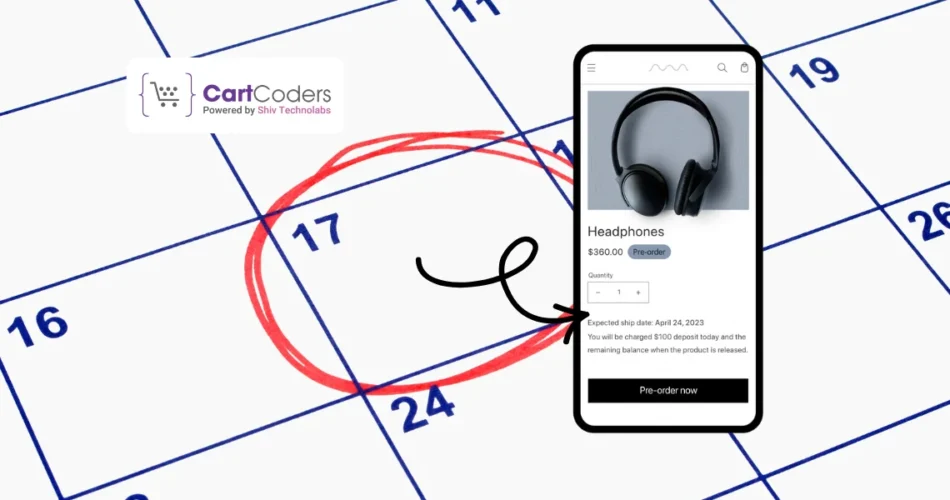
Preorders in Shopify allow sellers to take orders before a product is in stock or officially launched. Customers either pay or reserve the product before it is available. This model helps merchants reduce their financial risks, engage their audience, and gauge interest before making significant investments in stock.
By 2025, a growing number of Shopify merchants are turning to preorders because they not only reduce inventory risks but also create momentum before launch. Preorders today are more than just a way to reserve items—they are a strategic approach to growth and early revenue.
Enable Preorders On Your Shopify Store
We set rules, logic, and inventory sync


This guide covers the importance of preorders, strategies for building demand, various setup methods, key differences between preorders and backorders, best practices, payment models, examples of successful brands utilising preorders, and how CartCoders can assist in implementing this strategy.
Why Preorders Matter for Shopify Stores
Preorders are not just a tool—they use customer psychology and solve business problems at the same time.
Customer Psychology: Excitement & Exclusivity
A preorder creates the feeling of scarcity. Shoppers feel they are getting early access others don’t have. That feeling of joining in before the public release makes them more likely to purchase without waiting.
Business Benefits: Cash Flow, Demand Validation, Inventory Planning
Preorders bring in money before production or delivery. That improves cash flow for merchants by lowering upfront capital stress. Preorders also show which products customers are most interested in. Sellers can then order correct amounts of stock without overproducing or wasting resources.
Preorders on Shopify as a Growth Lever
When Shopify merchants add preorder options, their stores act as launchpads for demand. Customers who preorder show their trust and commitment, and that early trust often leads to higher launch sales when products finally reach the market.
Shopify Preorder Strategy: Building Sales Before Launch
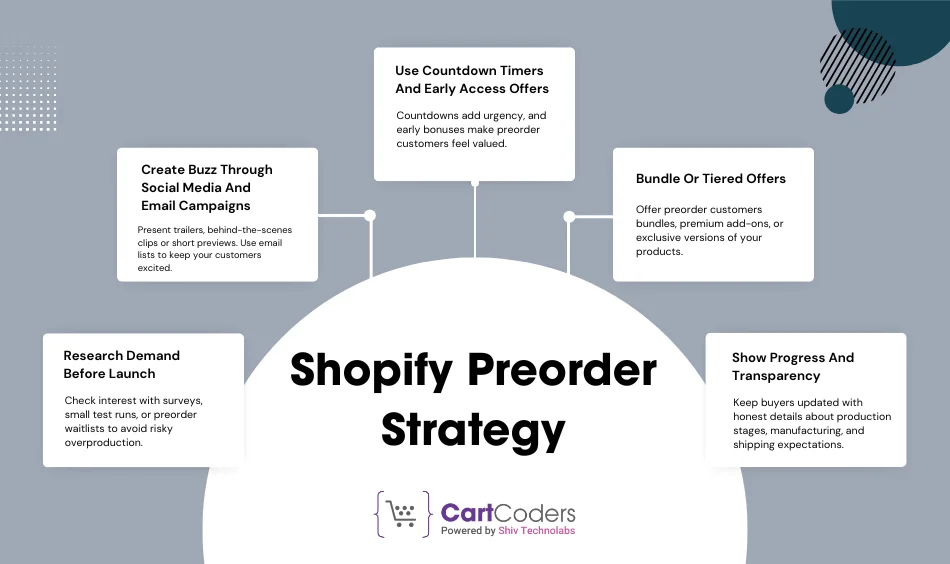
To generate momentum before a new product is available, use these strategies:
- Research Demand Before Launch:- Check interest with surveys, small test runs, or preorder waitlists to avoid risky overproduction.
- Create Buzz Through Social Media And Email Campaigns:- Present trailers, behind-the-scenes clips or short previews. Use email lists to keep your customers excited.
- Use Countdown Timers And Early Access Offers:- Countdowns add urgency, and early bonuses make preorder customers feel valued.
- Bundle Or Tiered Offers:- Offer preorder customers bundles, premium add-ons, or exclusive versions of your products.
- Show Progress And Transparency:- Keep buyers updated with honest details about production stages, manufacturing, and shipping expectations.
How to Set Up Preorders on Shopify
There are two ways to set up preorders in Shopify: directly with the platform or with apps.
Native Manual Method (Product Availability Date)
You can assign a product release date in Shopify. Orders placed before that date are processed as preorders. This works best for simple preorder needs, but it has limitations.
Using Shopify Preorder Apps
Apps provide more advanced features such as deposits, automatic messaging, stock limits, and customized buttons.
Steps to Customize Buttons, Messaging, Order Tracking
- Change buttons like “Add to Cart” into “Preorder”
- Add clear notes such as “Ships in 6 weeks”
- Display preorder slots if you want to show scarcity
- Explain preorder details in order-confirmation emails
- Use Shopify tags to manage preorder orders separately
When set up properly, your Shopify store becomes a tool for driving preorder flows instead of just taking regular orders.
How Preorders Boost Sales on Shopify
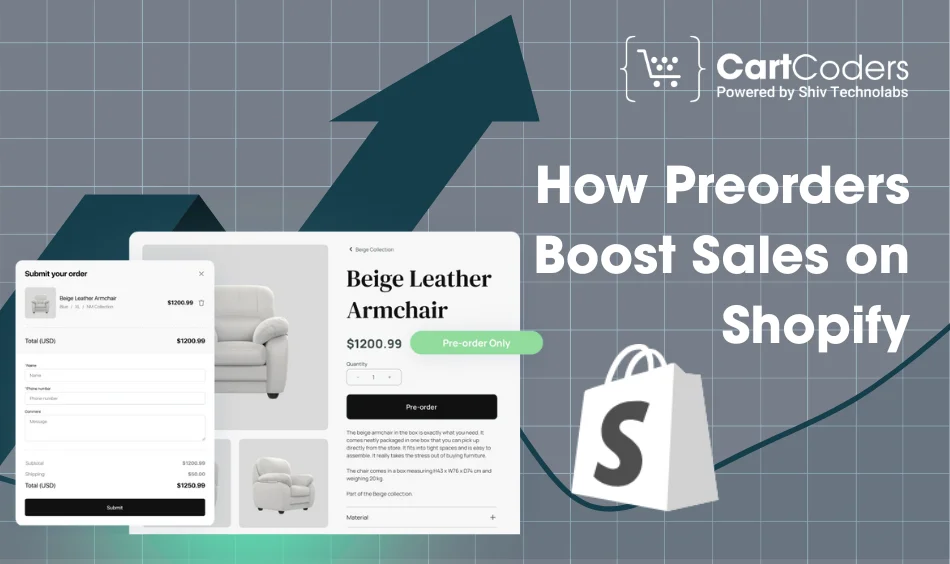
Preorders bring measurable benefits to online stores beyond just early ordering.
Build Hype Before Inventory Arrives
Opening preorders makes shoppers excited and draws attention before stock even lands.
Convert Interest into Revenue
Instead of waiting until inventory is on hand, sales are secured early. This prevents lost opportunities from customers forgetting or moving on.
Better Cash Flow for Scaling Operations
Money arrives before fulfillment, funding production or marketing without borrowing.
Shopify Preorders to Boost Sales Across Products
Once customers trust you from an early preorder, they are more likely to continue preordering future launches. Loyalty and repeat business grow.
Mitigate Launch Risk
If the preorder numbers are too low, merchants can adjust strategies or stop production to avoid costly mistakes.
Shopify Preorders vs Backorders
Preorders and backorders often get confused, but they are different approaches.
- Preorders mean selling before the product is launched.
- Backorders mean selling while the product is temporarily out of stock.
Here’s a quick breakdown:
| Feature / Characteristic | Preorders | Backorders |
| Customer Expectation | They know it’s not yet available | They believe it will restock soon |
| Payment Timing | Full or partial upfront | Often processed at shipping |
| Use Case | New releases or restock events | Stock shortages of popular items |
| Risk | Delay or cancel disappoints buyers | Stock mismanagement delays orders |
| Marketing Advantage | Builds hype and excitement | Limited marketing use |
Choose based on your product cycle and level of customer demand.
Best Practices for Shopify Preorders
Merchants need to handle preorders carefully to keep trust intact.
- Communicate shipping dates clearly: Always tell customers estimated ship periods.
- Use preorder limits to create urgency: Showing order quantity left can speed up purchases.
- Automate updates through emails or SMS: Send order updates at key stages like production, shipping, or delays.
- Transparent policies and refund options: Give customers clear choices in case of issues.
Following these rules helps preorder campaigns grow without frustrating buyers.
Payment Models for Shopify Preorders
How payments are handled during preorder is crucial. Sellers can choose from different structures.
- Full upfront payment: Charge entire price at time of preorder. Simple, but some customers may hesitate.
- Partial deposit system: Take a portion now and collect the rest before shipping. Builds customer confidence while helping your cash flow.
- Pay later with authorization: Authorize payments now, but capture them only at shipping. This reduces refund issues.
Launch Products Early With Preorder Support
From countdowns to backorder strategy built-in
Many Shopify apps allow all of these, giving stores the flexibility to choose what works best.
Real Case Studies: Brands That Nailed Shopify Preorders
Looking at real Shopify stores shows how preorders have worked in practice.
- Allbirds: Tested which shoe styles customers would pay for before starting full production.
- Peach & Lily: Used preorder campaigns for limited skincare launches with early-bird offers.
- Moment: Sold photography gear through preorders to raise money for manufacturing and shipping.
- Gymshark: Used preorders to secure revenue and gauge popular sizes before producing full batches.
These examples prove preorder methods work for clothing, technology, beauty, and other categories.
Why CartCoders Recommends Preorders for Shopify Stores
CartCoders helps retailers not just understand preorders but also implement them fully.
- Complete preorder setup: We install apps, design checkout flows, and make everything smooth.
- Custom design and payment models: We tailor preorder buttons, deposits, and clear order notes for your brand.
- Automated communication: Our process includes email and SMS updates to keep buyers informed.
- Full Shopify setup services: Beyond preorders, we help you build a store designed for growth.
Working with CartCoders means your Shopify preorders are professionally managed to maximize sales.
Conclusion
Preorders are more than tactical, they are a scalable growth approach. They create early demand, generate upfront money, reduce risks, and strengthen customer loyalty. They also help turn interest into secure, committed purchases well before stock arrives.
At CartCoders, we implement end-to-end preorder systems that connect payments, communication, and fulfilment. With the right setup, you can turn your next launch into a controlled, profitable campaign.If you want to integrate Shopify preorders into your business model, reach out to CartCoders.
FAQs
By setting a future availability date on your product and changing the button label to “Preorder.” This works, but it lacks deposit options and advanced messaging.
The most effective apps are one that permit part-deposits and standard limits, automation in messaging, and support on the back-end. Select applications which are flexible to both the seller and buyer.
Yes. You can collect a deposit and charge the remaining balance later.
Preorders are made before product release, while backorders are taken for temporarily sold-out products.
Yes. They let merchants earn cash before delivery, which supports production and marketing.
Include information about what the shipping dates will be, the refund policy, and whether you are using a deposit or a pay-later option.
Send regular updates. If delays are long, consider offering discounts or cancellation.
Yes. Preorders guide production decisions based on demand, preventing unsold stock.
Use limited slots, visible order counters, countdown timers, and early bonuses.
They’re valuable for both. New launches benefit the most, but they can also manage popular restocks.


