Selling kitchen appliances online isn’t just for big brands anymore. Nowadays, even small businesses and solo sellers are making real sales by setting up their stores. More people now shop for blenders, ovens, and coffee makers from their phones than by walking into a store. They want clear product details, fast delivery, and smooth returns.
But here’s the thing: uploading a few products won’t get you far. If you want people to buy from you and come back again, you need the right setup. That includes smart product pages, simple checkout, and tools that help your store run without stress.
In this guide, we’ll walk you through how to sell kitchen appliances online step by step. Whether you’re just starting or shifting from offline to online, you’ll find everything you need to do it right.

Why Sell Kitchen Appliances Online?
More people now buy kitchen appliances online than ever before. From air fryers to dishwashers, shoppers prefer browsing on their phones, reading reviews, and comparing features before hitting the buy button.
According to Statista, 32.6% of all kitchen appliance sales now happen online.
This rise is driven by convenience, wider choices, and better pricing. Add to that, many buyers now look for EMI options, express delivery, and return policies—things that online stores can offer easily.
For new sellers, this means you don’t need a big showroom. You just need a clean, working online store that gives customers the right details at the right time.
Whether you plan to sell branded appliances or launch your own line, there’s room to grow—if you set things up the right way.
Step-by-Step Setup to Sell Kitchen Appliances Online
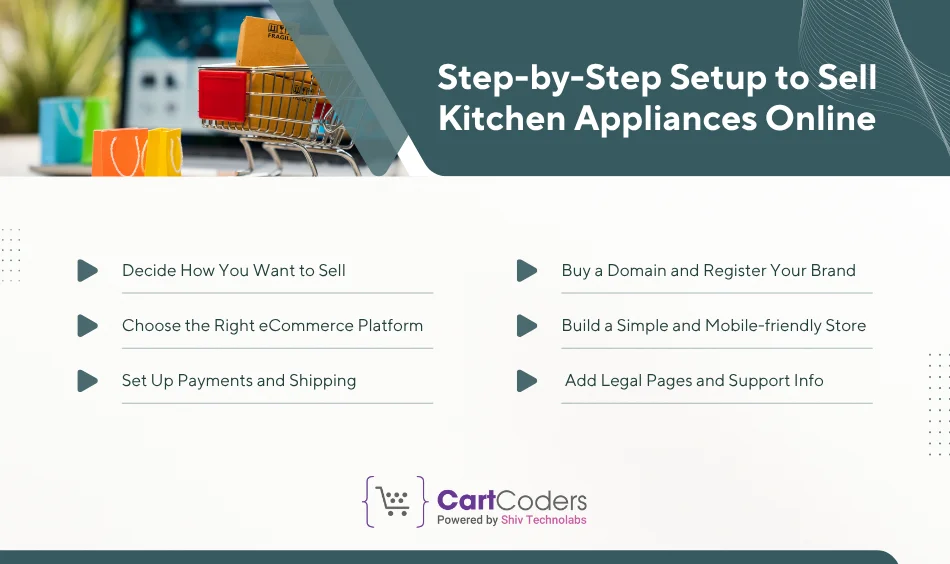
Starting an online appliance store may sound big, but with the right steps, you can get it done without confusion. Here’s how to start selling kitchen appliances online the right way:
1. Decide How You Want to Sell
Pick a model that fits your budget and goals:
- Direct-to-customer (DTC): You own the store and handle everything
- Third-party platforms: Sell on Amazon, Flipkart, or others
- Hybrid: Sell on your site and marketplaces together
2. Buy a Domain and Register Your Brand
Keep the domain name short, clear, and easy to remember. A .com or .store domain works well. Also, get your brand name registered to avoid future issues.
3. Choose the Right eCommerce Platform
Some of the top platforms include:
- Shopify: Easy to use, full control, app support
- WooCommerce: Works with WordPress, great for content-heavy stores
- Wix: Budget-friendly and simple for small setups
We’ll compare them in detail in the next section.
4. Build a Simple and Mobile-friendly Store
Keep your site clean and easy to use:
- Use categories like “Blenders,” “Ovens,” or “All Under $100.”
- Make sure your store looks good on phones and tablets
- Add filters for price, brand, size, or features
5. Set Up Payments and Shipping
Add trusted payment gateways like Razorpay, Stripe, or PayPal. Make sure you also offer:
- Cash on Delivery (COD)
- EMI and Buy Now Pay Later options
- Shipping partners that support tracking and quick delivery
6. Add Legal Pages and Support Info
Don’t forget:
- Return & refund policy
- Warranty info
- Customer support email or chat
Having these builds trust and avoids confusion later.
Need Help Setting Up Your Appliance Store?
We build Shopify stores with filters, payments, and product pages that convert.


Top eCommerce Platforms for Kitchen Appliance Stores
Choosing the right eCommerce platform can save you time and future stress. Whether you’re just starting or already have a small setup, your platform should support products, payments, and delivery integration without needing too much manual work.
Here’s a quick look at the most popular options:
1. Shopify
Best for: Sellers who want a clean, easy-to-manage store without coding
- Drag-and-drop design
- Fast store setup
- Access to apps for reviews, EMI, popups, and more
- Excellent support for mobile-friendly design
2. WooCommerce
Best for: WordPress users who need more control
- Works as a plugin inside WordPress
- Good for content-driven stores (e.g., blogs + products)
- More flexible but needs some tech knowledge
- Add-ons available for reviews, shipping, and payments
3. Wix
Best for: Small sellers who want a quick launch
- Simple builder for pages and products
- Suitable for stores with fewer SKUs
- Less flexible for scaling or heavy customizations
Comparison Table
Each platform has its own strengths, depending on your needs, budget, and store size. Below is a quick comparison to help you choose the one that fits best.
| Platform | Ease of Use | Monthly Cost (USD) | Good For | Limitations |
| Shopify | Very Easy | $29 – $299 | DTC stores, brands | Needs paid apps for extras |
| WooCommerce | Medium | $20 – $100 (hosting) | Content + product sites | Requires some setup skills |
| Wix | Easy | $17 – $35 | Small sellers | Not ideal for scaling |
Pick one based on how big your catalog is, how much help you need, and how fast you want to go live.
Must-Have Features in a Kitchen Appliance Online Store
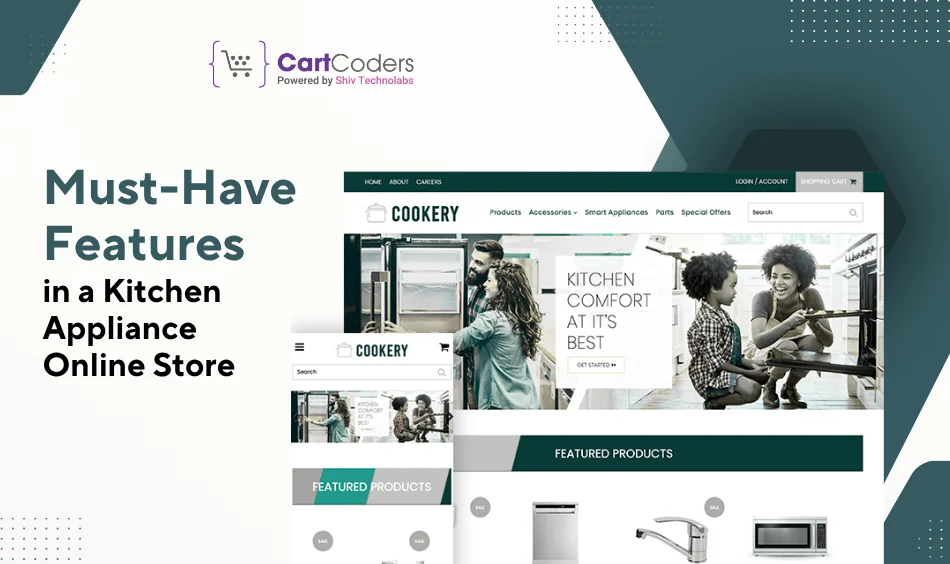
Your online store should make browsing and buying as simple as possible. These features help buyers decide faster and feel confident in their purchase:
- AI-powered search and filters
- Product comparison tool
- High-quality images and demo videos
- Customer reviews and ratings
- EMI, COD, and BNPL payment options
- Warranty, return, and service information
- Mobile-friendly layout
- Live chat or support widget
- Related product suggestions
- Cart reminders and email follow-ups
How to Write Product Pages that Sell Kitchen Appliances?
Your product page is where the decision happens. If it’s unclear, slow, or missing key info, buyers will leave — even if your product is great.
Start with a short, clear title that includes the product name and type. For example: “Stainless Steel Electric Kettle – 1.5L, Auto Shut-Off.” Avoid long or fancy names. People search with simple terms.
Next, write a brief description focused on real benefits. Don’t just say what it is — explain how it helps. Instead of saying “500W power,” say “Boils water in under 3 minutes with 500W heating.”
List the key specs clearly: size, weight, power use, warranty, and what’s included in the box. Use bullet points here if needed — this helps people scan fast.
Use high-resolution images from multiple angles. Show it on a kitchen counter if you can. If possible, add a short video showing how the product works — even a 30-second clip makes a difference.
End the page with trust-building content: delivery time, return policy, warranty terms, and real reviews. Also, add a short FAQ answering common buyer doubts, like “Is this dishwasher safe?” or “Does it work on induction stoves?”
The goal is simple: don’t make them guess. Give them everything they need to feel sure before they click “Buy.”
Need Help Building Your Kitchen Appliance Store?
CartCoders builds clean, mobile-ready, and fast-loading Shopify stores made for real shoppers. We set up everything from product filters to payment options, and make sure your store looks right on every screen.
You won’t get a messy setup or confusing layouts. You’ll get a store that’s ready to sell from day one, with all the tools you need.
👉 Schedule a Free Consultation and let’s get your store online the right way.
Conclusion
Selling kitchen appliances online is a real opportunity — but only if you set things up right. It’s not just about listing products. You need a store that’s easy to use, works on mobile, and gives buyers all the details they care about.
Pick the right platform. Keep your product pages simple and helpful. Add smart filters, strong images, and flexible payment options. And don’t skip the basics like warranty info, return policies, and live chat.
Do it with care, and your store can bring in real, steady sales.And if you want to save time and get it done right, Contact CartCoders.


